
ACTIVE CAMPAIGN
Water Quality & Forever Chemicals
Southern Water's proposed Ford water-recycling scheme: what does it mean for our rivers, drinking water and coastline?
Southern Water wants to recycle treated wastewater at Ford and return purified water to the local water system.
But important questions remain about what the process removes, what is left behind, where that waste goes and what safeguards will protect our rivers, drinking water and coastline.
We believe the public deserves clear answers before this scheme proceeds.
We're not against securing future water supplies. We're against going ahead without proper evidence, independent scrutiny and real safeguards.

On this page
What's being proposed at Ford?
Southern Water proposes a water-recycling scheme at Ford, near Littlehampton. Treated wastewater would go through extra purification, with purified water returned to the natural water system. The stated aim is to secure future water supplies, especially during drought.
Up to 15m litres daily
Southern Water describes a facility designed to supply up to 15 million litres of recycled water each day, aimed at boosting local water resilience.
Separation, not disappearance
Advanced filtering splits water from dissolved substances; it does not destroy them.
Where the big questions lie
That residual waste must also be safely managed and disposed of. That is precisely where the critical environmental and public health questions remain unanswered.
How it works, in plain English
Think of it like a very fine tea strainer: treated wastewater is pushed through an extremely fine filter (technical name: reverse osmosis). Clean water squeezes through; most of the unwanted stuff is held back. It splits the water into two paths going in two directions.
Treated sewage at Ford
Wastewater that has already been through normal treatment at the Ford works.
Extra filtering
A very fine filter. Clean water gets through; the rest is held back, not destroyed.
Cleaner water
Up to 15 million litres a day, according to Southern Water.
Pipeline to the river
Piped roughly 20 to 30 km inland.
Western Rother river
Released into the river near Hardham, where drinking water is also taken.
Concentrated waste
Everything the filter holds back is left in a smaller, more concentrated stream.
Back to Ford works
Southern Water says it returns to the existing Ford wastewater works.
Out to sea
Southern Water's project document names the existing Long Sea Outfall off Littlehampton as the route. What is in the waste, how much, and any extra treatment have not been published.
What is caught does not vanish: it ends up in a smaller, stronger leftover stream, and that leftover has to go somewhere. Cleaner water goes to the river; the leftovers go back to Ford and on towards the sea.
Filters don't catch everything equally. We do not claim this process removes nothing, nor that dangerous substances will definitely remain. What we want is real, published test results for Ford showing what goes in, what comes out clean and what is left in the leftovers.
Simplified illustration of the process. It does not show the final engineering arrangements.
Independent scrutiny is vital
We welcome genuine investment in our water supply. But the public cannot evaluate this scheme without full disclosure of what is separated and where it goes.
Forever chemicals: why we're asking
PFAS are man-made chemicals used in everything from non-stick pans and waterproof clothing to food packaging. They are called ‘forever chemicals’ because many do not break down: they can stay in rivers, groundwater and soil for years, and some can build up in the bodies of people and animals.
Not just an environmental issue
Scientists have linked exposure to certain PFAS chemicals with a number of health effects.
Higher cholesterol
Effects on the immune system
Lower birth weight
Changes in liver function
Some PFAS have also been linked to particular cancers.
These effects are not proven for every chemical in the PFAS family. The risk depends on the substance, how much you are exposed to and for how long.
This is a potential public health issue, not only an environmental one.
What we are worried about
Southern Water’s recycling proposal splits the water into two distinct streams:
Into the river
The purified water is planned to go into the Western Rother, near where drinking water is taken.
Has it been tested for PFAS and TFA?
Without published testing, the public cannot see what remains in the recycled water before it enters the river system.
Where are the independent tests showing what is left in this water?
Out to sea
The filtering does not destroy what it removes. It ends up in the leftover concentrated stream.
What is in it, and how much?
If pollutants are filtered out of river-bound water, they do not simply vanish—they concentrate in the leftover discharge pipe.
What volume of concentrated chemicals will be pumped offshore?
We are not saying these chemicals are in the water or the waste. We are saying nobody has published the test results to show they are not.
We do not claim the Ford scheme makes drinking water unsafe. We are calling for transparent, published, independent testing so our community can see verified facts rather than assumptions.
The Spotlight on TFA
TFA (trifluoroacetic acid) is a particularly persistent member of the PFAS family and highly mobile: it can travel through water into groundwater, soil and food crops. There are still important questions about its long-term effects and how well it can be removed from water.
We need to know if it is specifically tested, with baseline testing carried out before any water recycling begins.
Specific baseline testing for TFA before any water recycling begins, published for public scrutiny.
What the Evidence Tells Us: Three Key Points
These three principles guide our call for transparency and independent scrutiny at Ford.
PFAS is a big family
There are thousands of different PFAS compounds, so testing for just two or three standard ones doesn't show you the whole picture.
Filters aren't all equal
No single treatment removes every chemical equally, so we cannot just assume modern membranes will stop everything.
We need Ford-specific results
Generic national laboratory brochures cannot replace independent, published test results from the actual Ford plant and our local water.
Demand Ford-Specific Testing Data
See the exact questions we are putting to Southern Water regarding forever chemicals and residual waste.
Where does the waste go?
Advanced water purification does not make impurities disappear. For every litre of purified water returned to the environment, a residual stream remains holding the separated substances. The public needs to know what happens to that waste.
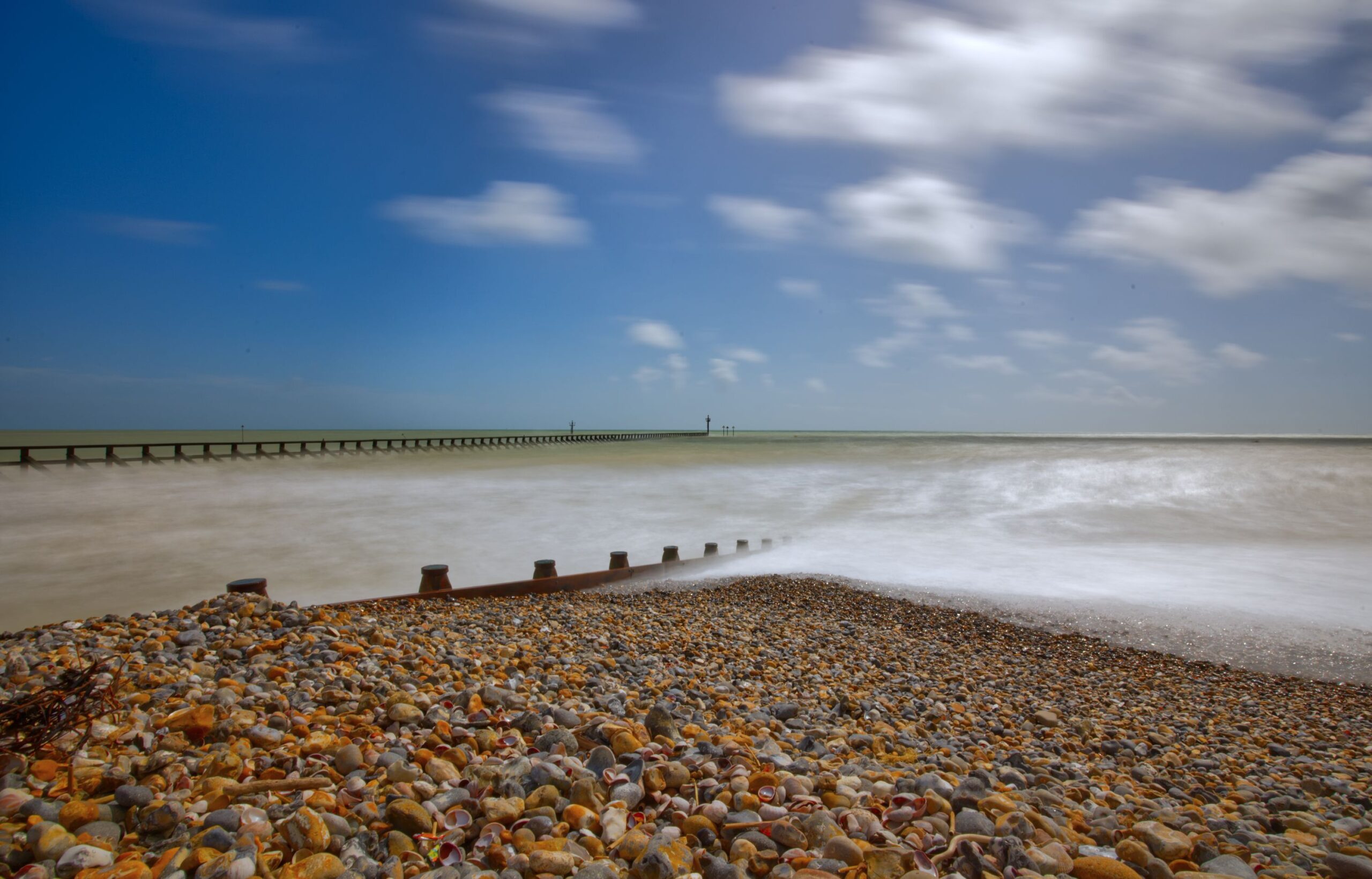
Our coastline: what goes into the sea matters.
The facts vs the gaps
Published Route
- The purification process separates wastewater into purified water and residual waste.
- According to Southern Water, the removed impurities return to the Ford wastewater works, then go out to sea through the existing Long Sea Outfall off Littlehampton.
Source: Southern Water published project materials.
Missing Crucial Data
- Detailed chemical composition of the concentrated residual stream.
- Total daily and seasonal volumes of concentrated waste produced.
- Exact additional treatment arrangements at Ford prior to outfall discharge.
- Independent assessment of long-term coastal and marine implications.
We should not have to rely on vague assurances.
The public shouldn't accept vague assurances. If contaminants are being separated out and diverted towards our coastline, the details must be open to public scrutiny.
Full disclosure on coastal discharge
We do not claim the residual waste stream contains proven dangerous concentrations. What we state is simple: the public deserves full, independent data on what goes out to sea before anything begins flowing.
Where does it enter our river?
The proposed scheme involves transferring purified water through a pipeline of roughly 20 to 30 kilometres to the Western Rother, near Hardham. Hardham Water Supply Works abstracts water from the Western Rother and local groundwater for public drinking supplies. That makes the exact entry point one of the most critical unanswered questions of this entire project.
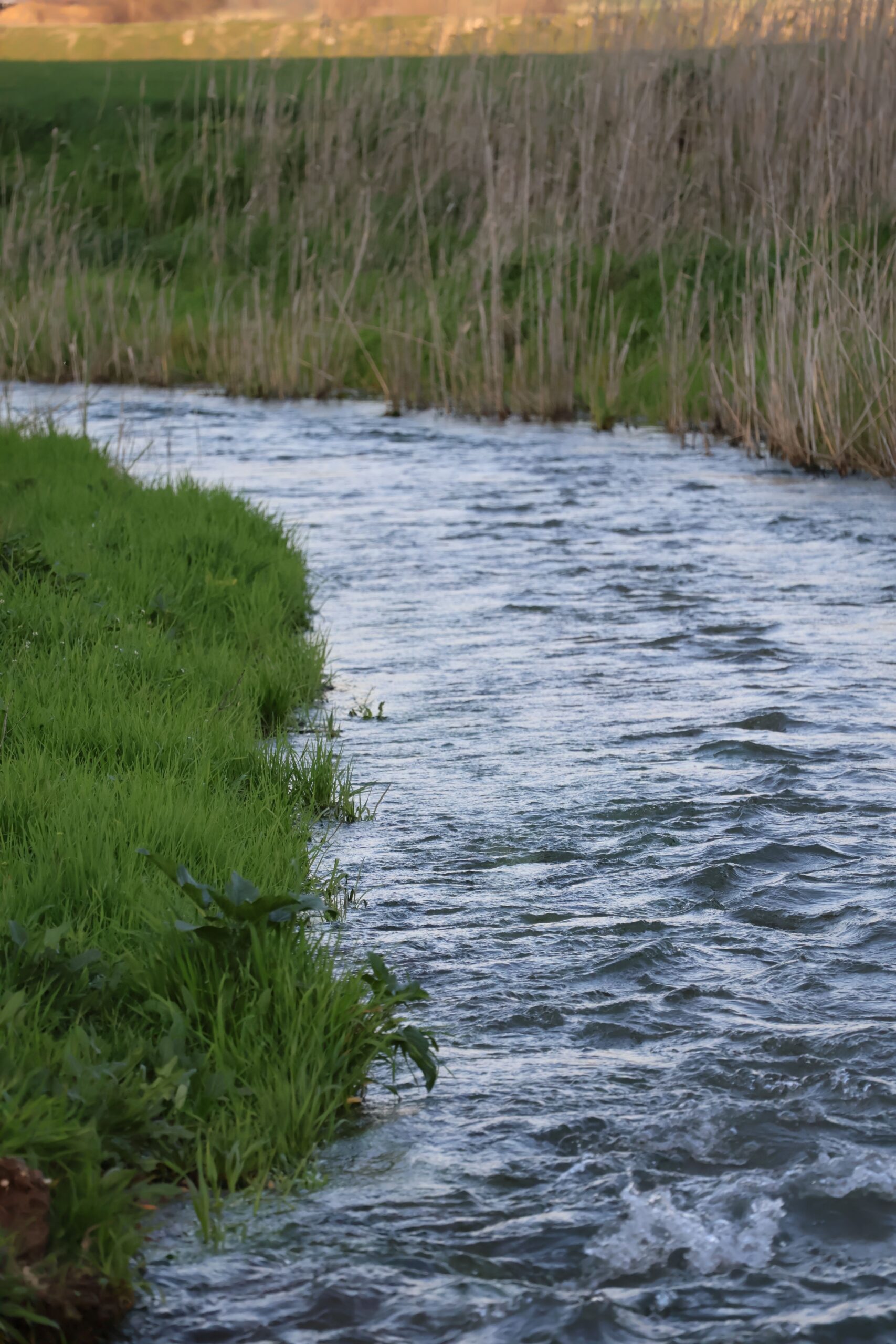
The Western Rother flows through the South Downs landscape towards Pulborough and Hardham, where crucial local water abstraction takes place.
Any river transfer must account for ecological health and public transparency across the entire catchment area.
Why the entry point matters
Hardham Water Supply Works takes water from the Western Rother and local groundwater for public supply. That makes the exact location where recycled water reaches the river system a critical factor in public understanding.
There has been differing information about whether the entry point would be upstream or downstream of Hardham, and the location is not confirmed. Clear clarity has not yet been established in published scheme plans.
Because the Western Rother provides essential drinking water abstraction, residents and local communities deserve unequivocal facts regarding where discharge meets the river.
“We shouldn't have to guess where recycled water enters the river in relation to a public water supply.”
Clear project documentation, not ambiguous maps
We do not claim that the Environment Agency has found PFAS contamination at Hardham, nor do we claim the scheme will make drinking water unsafe. What we require is simple transparency: published project documents must clearly establish whether the entry point is upstream or downstream of Hardham, with an independent assessment of public water supplies.
Our Coastline: what else will be going into the sea?
At a public meeting on 12 November 2026, Southern Water gave an update on bathing water and local sewage work across Bognor Regis, Littlehampton and nearby villages. While that session was not a technical assessment of the Ford recycling scheme, it highlighted how our coastline and local waters are currently performing.
Where the outfall is
Simple sketch. Not to scale. Positions are approximate.
Bathing water ratings measure bacteria, not forever chemicals
Official ratings (Excellent, Good, Sufficient, Poor) are calculated strictly on bacterial pollution — specifically E. coli and intestinal enterococci.
They do not test for PFAS or TFA. A good bathing water classification tells you about bacteria levels on the day; it cannot tell you whether other industrial or chemical discharges are present or safe.
What we are, and are not, saying
We are not claiming that the proposed Ford recycling scheme will make bathing water worse. That has not been established.
With bathing water ratings as they stand today, local residents have good reason to ask what additional discharges the recycling process would send through the Long Sea Outfall, and what evidence shows they will be safe for the receiving marine environment.
Southern Water's Latest Update
Preliminary sampling presented by Southern Water on 12 November 2026 suggests potential movement across three local bathing waters:
Bognor Regis (Aldwick)
Company sampling suggests:Could improve to Sufficient
Bognor Regis East
Company sampling suggests:Could improve to Good
Pagham
Company sampling suggests:Could improve to Excellent
Important note on classifications: These are preliminary findings presented by Southern Water. Official Environment Agency classifications are due in December 2026. Bathing water classifications are based on longer-term sampling, not a single test, so the official results matter and the company predictions must be checked against them when published.
“Poor” & “Sufficient” is not a ringing endorsement of the water our families swim in.
Sussex Coastline & Bathing Waters
Our beaches and coastal waters require robust, independent evidence for the sea and coast. The health of swimmers, families, and marine life depends on rigorous standards.
Why should you care?
Water recycling affects everyone who lives, works, or raises a family in Sussex. Here is why independent scrutiny matters to every one of us.
OUR DRINKING WATER
We need confidence that water entering the natural water system is properly tested, independently assessed and protected.
OUR RIVERS
We need to know what enters the Western Rother, what's already in it and how the scheme could affect it.
OUR COASTLINE
The leftover waste is planned to go out to sea. Bathing water ratings only measure bacteria, so we need to know what else would be going into the sea and the evidence it is safe for the coast.
FOREVER CHEMICALS
These chemicals barely break down. We are not saying they are in the water or the waste. We are saying nobody has published the tests, so we need to know what goes into the river and what goes out to sea.
PUBLIC CONFIDENCE
People shouldn't have to rely only on the assurances of the company proposing and running the scheme.
Prove It Before It Flows
We're calling for independent scrutiny and full transparency before this scheme goes ahead. The public shouldn't have to rely on company assumptions when it comes to local water and coastal health.
Independent testing
Establish and publish a proper baseline of water quality before the scheme operates, including specific testing for relevant PFAS chemicals and TFA.
Full disclosure of the waste stream
Publish the expected composition, volume and concentration of the residual waste, and explain exactly how it will be treated and where it will ultimately go.
Proof it works
Publish independent evidence of how effectively the treatment removes individual PFAS chemicals, TFA and other relevant contaminants. No broad claims about overall purification performance.
Protect drinking-water supplies
Clearly establish the proposed river entry point in relation to the Hardham abstraction and publish an independent assessment of the implications for public water supplies.
Assess the environmental impact
A proper assessment of the residual discharge, including composition, volumes, cumulative contaminant loads and potential effects on the Western Rother, the coast and the marine environment.
Open, transparent monitoring
Publish regular monitoring results in a format the public can understand; explain who is responsible for monitoring, what happens if results fall outside agreed limits and how residents will be told.
We are not against securing future water supplies or investing in new technology. We are against proceeding without proper evidence.
Our Water. Our Environment. Our Right to Answers.
Sussex communities rely on clean rivers, safe drinking water and protected beaches. No water recycling scheme should proceed without complete transparency and verified proof.
Ten Questions Southern Water Must Answer
Before decisions are locked in, residents need clear, factual and written answers to these ten key questions.
Exactly which PFAS chemicals and other contaminants will the Ford process remove?
Is TFA specifically included in the testing and treatment assessment?
Which substances may pass through the membranes into the purified water?
What will be present in the residual waste stream?
How much residual waste will be produced each day?
What additional treatment will it receive before discharge?
Where exactly will recycled water enter the Western Rother in relation to Hardham?
What independent evidence demonstrates that the scheme will protect public water supplies?
What additional discharges will go out through the Long Sea Outfall, and what evidence shows they will be safe for the receiving marine environment?
Will all monitoring results be published and made accessible to the public?
Ask Them Yourself
Southern Water has established a dedicated project contact for the Ford recycling proposal. We encourage every resident, parish council and community group to put these questions directly to the project team and ask for clear, written answers.
The Evidence: Read the Source Material
The facts on this page come from Southern Water's published information about the Ford scheme and its 12 November 2026 local public meeting update. We can back them up. You can inspect the source records directly below.
Bathing Water Reports and Classifications
Southern Water's published reporting on bathing water performance, sampling and infrastructure across regional coastal sites.
2025 Bathing Waters Classifications
Official statutory classifications published by the Environment Agency covering monitored coastal waters across England.
Our Water. Our Environment. Our Right to Answers.
Sussex First is calling for transparency, independent scrutiny and accountability. The public deserves to know exactly what is being put into our rivers and seas, what is being removed, and what happens to everything left behind.